site loader
site loader
July 25, 2024 A Jack Of All Trades Or A Specialist ?

A Jack Of All Trades Or A Specialist ?

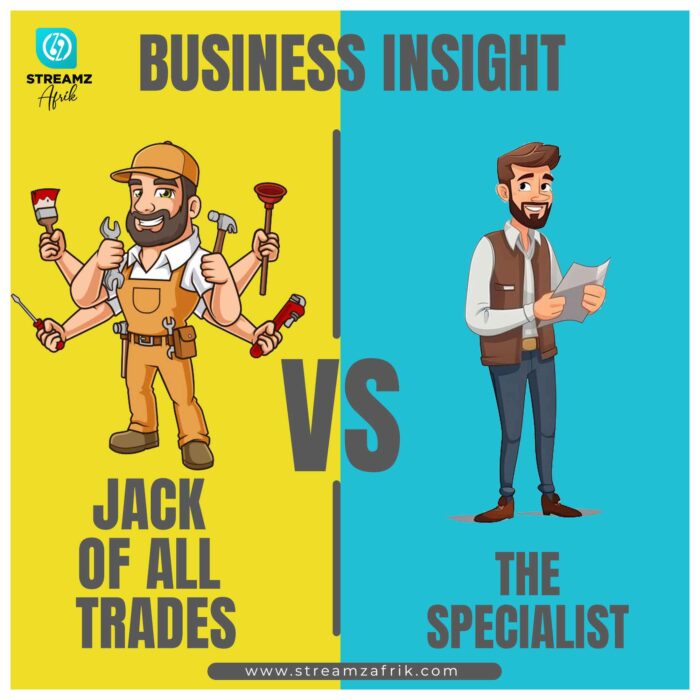
“JACK OF ALL TRADES VS SPECIALIST”

Both being a jack of all trades and a specialist offers significant advantages, from gaining a competitive edge to achieving efficiency in the workplace. This is particularly relevant for those entering the music industry, whether as a musicpreneur or an existing business person looking to establish a niche and thrive in the industry.

Depending on personal goals, individuals may find value in acquiring diverse skills to work more efficiently, especially when starting out independently. Alternatively, focusing on honing a specific skill may provide a higher level of productivity for specialists.

A jack of all trades is someone who possesses a broad range of skills and knowledge across various fields, making them adaptable and versatile. Specialists, on the other hand, have in-depth expertise and proficiency in a specific field, making them valuable for tasks that require precision.

Advantages of being a ‘Jack of all Trades’:
– Versatility and Adaptability: Able to switch between tasks and roles easily, contributing to multiple aspects of a project.
– Problem-Solving: A broad knowledge base allows for creative solutions and innovative ideas.
– Career Flexibility: Ability to transition between different careers and industries, and less likely to be affected by industry-specific downturns.

Advantages of being a Specialist:
– Expertise and Precision: Deep knowledge and skills lead to higher quality work and innovative advancements.
– Higher Demand in Niche Fields: Specialists are often in higher demand and can command higher salaries.
– Career Advancement: Sought after for leadership roles due to their expertise, with clear pathways for career progression.

Both skill sets have advantages and challenges, and the decision to pursue one over the other may be influenced by career goals, personal interests, and the evolving industry landscape.

In the face of these considerations, balancing a breadth of knowledge with deep expertise can be a winning strategy for success in the music industry. Understanding the demands of the chosen field, aligning career paths with strengths and interests, and being prepared to adapt as needed are crucial in a world where change is constant.

In view of these submissions, which would you prefer to be?

By: Majorie Lamptey
April 10, 2024 Digital Streaming Vs Traditional Sales

Digital Streaming Vs Traditional Sales

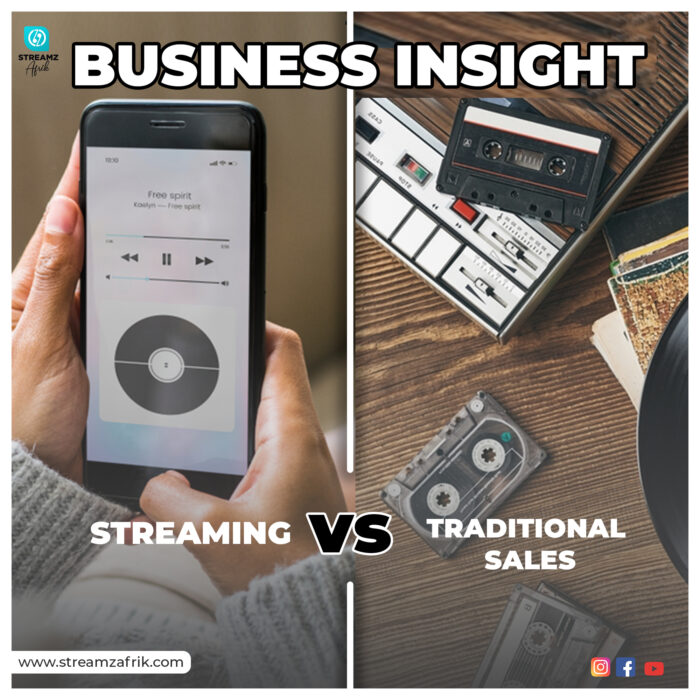
Streaming vs. Traditional Sales

In the ever-evolving landscape of the music industry, the clash between traditional sales methods and streaming platforms has become a defining feature. The advent of streaming services like Spotify, Apple Music, and YouTube Music has revolutionized how people access and consume music, challenging the dominance of traditional sales models such as CDs, vinyl records, and digital downloads.

Streaming platforms offer unparalleled convenience and accessibility to a vast library of music, allowing users to stream millions of songs on-demand for a monthly subscription fee or even for free with ads. This accessibility has democratized music consumption, breaking down barriers to entry for both listeners and artists. With just a few taps on a smartphone or computer, music enthusiasts can explore new genres, discover emerging artists, and curate personalized playlists tailored to their tastes.

Moreover, the rise of streaming has reshaped the way artists distribute and monetize their music. Independent musicians, in particular, have found a level playing field on streaming platforms, where they can reach a global audience without the need for major record label backing. Additionally, streaming offers artists valuable insights into listener demographics and engagement metrics, enabling them to refine their marketing strategies and connect more deeply with their fanbase.

However, the transition to streaming has not been without its controversies. Critics argue that streaming platforms pay artists disproportionately low royalties per stream, leading to concerns about fair compensation and the sustainability of a music career in the streaming era. Furthermore, the abundance of content on streaming platforms can make it challenging for artists to stand out amidst the noise, potentially hindering discoverability and career advancement.

On the other hand, traditional sales models, while declining in prominence, still hold nostalgic appeal for many music enthusiasts.

March 28, 2024 Why Storytelling Is A Powerful Marketing Tool in Lyrical Contents & Visuals

Why Storytelling Is A Powerful Marketing Tool in Lyrical Contents & Visuals

In today’s digital age, where attention spans are shorter than ever, storytelling has emerged as a key strategy for brands and artists to connect with their target audience on a deeper level.

Storytelling has always been a powerful tool to captivate and engage audiences, and when it comes to marketing in lyrical content and music videos, its impact is undeniable.

To evoke effective marketing through lyrical content and music videos, Music & Creative Artists must utilize the potency of storytelling to evoke emotions and create a memorable experience for the viewer or listener. By weaving a narrative into the lyrics of a song or the visuals of a music video, artists can take their audience on a journey, making them feel more connected to the message being conveyed.

Additionally, storytelling allows brands and artists to differentiate themselves in a crowded market. In an era where consumers are bombarded with advertising messages from all angles, stories have the power to cut through the noise and leave a lasting impression. By telling a compelling story through their music and visuals, artists can stand out and create a loyal fan base that resonates with their message.

Moreover, storytelling can also help build brand loyalty and trust. When done effectively, storytelling can humanize a brand or artist, making them more relatable to their audience. By sharing personal stories, struggles, or triumphs, artists can build a stronger emotional connection with their fans, leading to increased loyalty and support.

In conclusion, storytelling is a powerful marketing tool in lyrical content and music videos because it has the ability to create emotional connections, differentiate brands and artists, and build trust and loyalty with audiences. By harnessing the power of storytelling, artists can create more impactful and memorable experiences for their fans, ultimately leading to greater success in the competitive music industry.

March 20, 2024 Career Opportunities In the Music Business – Music Attorney

Career Opportunities In the Music Business – Music Attorney

Entertainment lawyers are law practitioners who typically work for a studio or an entertainment company as well as facilitating the legal process of representation and management for clients.
A Music lawyer is a specialized attorney who deals with legal issues surrounding the music industry.
This includes handling copyright infringement, trademark and royalty disputes, and many more.
Music lawyers assist artists in understanding the myriad concepts that drive the music business, conceiving strategies designed to procure the best deal possible.

Music attorneys can help
-Review and negotiate distribution agreements.
-Help keep you protected against accusations of music theft and help if someone allegedly stole your music.
-Review and prepare featured Artist agreements.
-Review agreements with music labels, music publishers, endorsement deals etc.

A music lawyer should be well-versed in areas of music licensing, copyright laws, contract laws and negotiation etc.
After earning a law degree, an entertainment attorney chooses to focus on entertainment, most often graduating from a law school that offers a specialization in entertainment law.