
site loader
site loader
February 21, 2024 Is Talent Enough?

Is Talent Enough?

In diverse ways, talent has been proven never to be the only anchoring factor to success in any field, and the music industry is no exemption.

No matter how talented you are, you cannot achieve much if you have scanty adherence to other key areas essential to your success in the music industry.

While talent undoubtedly plays a crucial role in an artist’s journey, there are several reasons why it is not enough on its own.
Talent can set you into doors of opportunities and breakthroughs but your knowledge, sense of purpose, and character are what will sustain and test the endurance of your talent.

Beyond talent, here are a few essentials that music and creative artists must graft for extraordinary achievements:

Diligence : Proverbs 22.29 profoundly describes the result of a diligent person by telling us who his audience will be, through a character of diligence, and it reads:
” Seest thou a man diligent in his business? he shall stand before kings; he shall not stand before mean men.”
Cultivating diligence through practice and continuous learning will greatly contribute to your rise in the industry. Diligence encapsulates persistence, constant practice, commitment, and a whole lot more.

Knowledge of the Music Business:
Often, the ecstasy of possessing a skill can slightly lure its possessor into the place of a novice and this is scary. To have music ambitions without a firm resolve to go in for what it takes to be an artist and all the other functions that embody your dealings with the music world might result in very scanty progress in your music journey and make you susceptible to being cheated for your ignorance.
Knowledge of your audience, your craft, and the music business will facilitate your growth and success. Go for knowledge!

Networking :
It is of a truth about the scripture that reads: “Iron sharpeneth iron, so a man sharpeneth his friend.” [Proverbs 27:17]
As a music or creative artist, your growth or expansion also lies in strategic alliance formation with people in the industry. This will build on your knowledge of the industry and will also present you with the avenue to make relevant contributions in your field. As you connect with other music artists and music savvy, you are presented with the opportunity to learn and unlearn many things that will contribute to your success.

Skill Mastery & Dynamism:
I like the way Robert Greene puts it, that: “Mastery is not a function of genius or talent. It’s a function of time and intense focus applied to a particular field or knowledge.”
This denotes that, music and creative artists must awaken to the realization of owning their craft in their journey. Skill mastery should lead artists to have a clear identity of the skill they possess, how to use it effectively, how to connect with their audience, stagecraft, and many more. Inclusively, they must ensure to be creative and abreast with changes that come with human interactions and the systems that control the music industry as well as how music is consumed.

Adaptation to Technological Advancement:
With technology being one of the ever-evolving systems, and the advent of digital platforms and streaming services, the music industry has undergone significant technological shifts. This is why artists must stay abreast of these changes, embrace the evolution that technology brings, and leverage digital tools for promotion, distribution, and audience engagement.

In summary, talent alone cannot produce an extraordinary artist in this competitive music and creative industry. Essentially, an amalgamation of talent and knowledge, character, sense of purpose, and ethics will make a ‘lethal combo’ in the career of any artist.

By: Majorie Lamptey Mensah
February 15, 2024 Are Artworks Important?

Are Artworks Important?

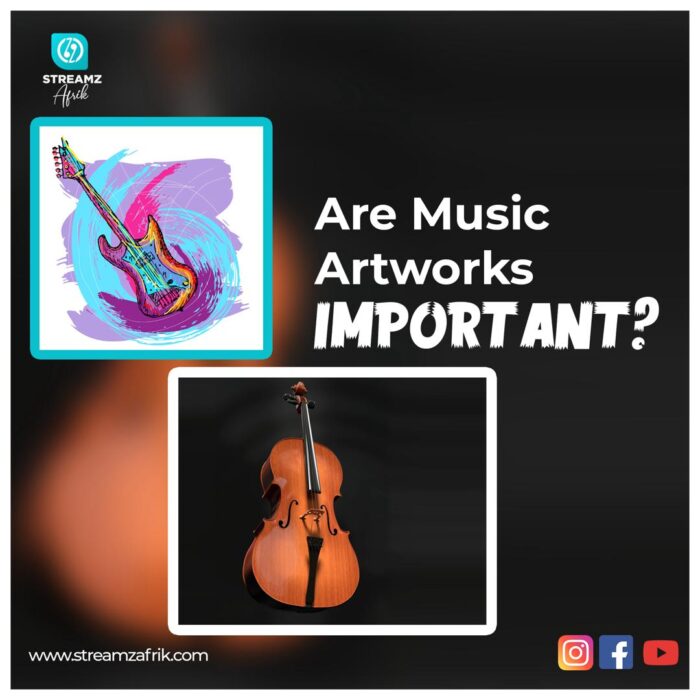
ARE ARTWORKS IMPORTANT?

In the #MusicBusiness and #CreativeIndustry, there are a list of specifics that act as sign posts to your identity as an Artist/Artiste.

Consider your ARTWORKS as one of the signposts to your Identity whether in the creative or entertainment industry.

It can serve a great tool of connection between you and your audience / fans.

Before releasing an Album, developing an Artwork is essential to giving a physical representation to your music yet to be released.

While artworks serve as a visual entrance to your music that is yet to be released, it also creates a distinct identity for your brand in the music space, capturing your style as an artist, the album’s mood and as well, capturing the essence of the music representation.

Transitioning from the physical space into the digital space, artworks have taken a digital format now, seeing that physical medium of music consumption in the form of CDs and DVDs has evolved as a result of digitalization.
With diverse pools of platforms to stream from, developing an artwork for your music piece play a crucial role in “creating an identifiable presence in the digital space”, as mentioned in an article published by ‘Calypsoroom’.

Artworks are now portrayed in digital thumbnails and it’s about time artistes recognize the marketing power that their artworks possess, beyond its attractiveness but relevant to influencing better visibility and performance of the music piece in this vast digital era.

By : Majorie Mensah Lamptey

February 8, 2024 How A.I Has Evolved The Music Industry.

How A.I Has Evolved The Music Industry.

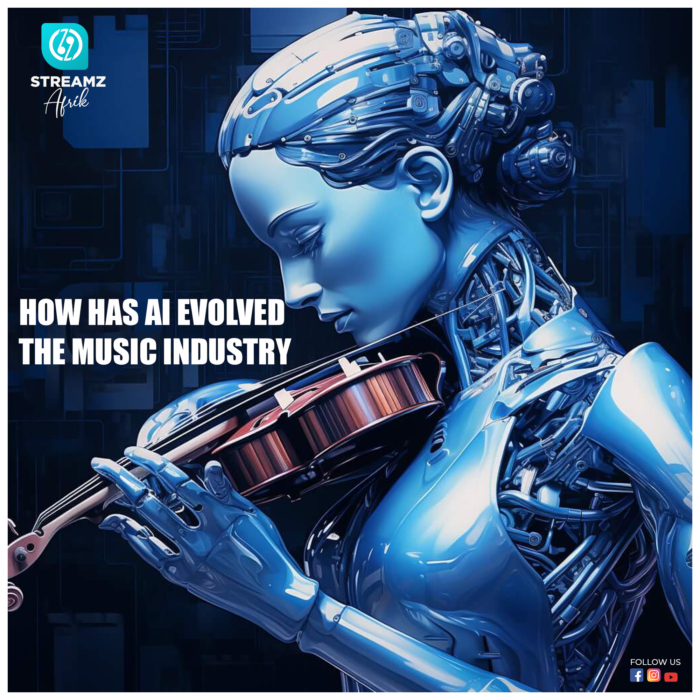
From education to communication, Artificial Intelligence is revolutionizing systems and human interactions of which the music industry is no exception.

With the introduction of AI resource generating system such as Chat GPT, creative artists in the entertainment industry can retrieve and derive vast resourceful information for their research and works.
The surfacing of AI is gradually creating an independent space for Artists to produce their own music without having to pay for huge cuts to have their music produced. LANDR for instance, is one example of an AI-based mastering tool that automatically analyzes and enhances audio tracks.

With in-built A.I. search engines on streaming platforms such as Pandora, Spotify and Apple Music, these streaming platforms are able to generate personalized recommendations to a user and analyze a user’s listening history.
A.I goes further to record and retain user’s music interest and suggests songs they are likely to enjoy to them.

Further, the rapid progressive revolution of A.I. system is currently being implemented in music copyright management. This involves automated detection and management of copyright infringement online. Contextually, YouTube has an embedded A.I. tool in a form of Content ID which scans uploaded video and audio tracks for copyright infringement.
If it finds a match, it can take it down automatically or give the copyright owner the option to monetize it.

The multifaceted tasks of the A.I. functionality to the music industry are vast and unfolds many intriguing benefits as well as opportunities to the success of the music industry and art creators.

In the face of all these benefits. there’s yet one question that remains debatable, which reveals how A.I. is being used to compose music.
The question here then is: “Does the use of A.I.in music composition stand contextual to the genre of music being composed or offers a generic pattern for music composition irrespective of the genre? ”

What are your thoughts on A.I. revolutionizing the Music Industry?

Written by : Majorie Mensah Lamptey.

October 13, 2023 Music Publishing – Music Business

Music Publishing – Music Business

MUSIC PUBLISHING AND LICENSING
Music publishing and licensing are two essential aspects of the music business that deal with the rights and financial aspects of music.

MUSIC PUBLISHING

Music publishing involves the management and exploitation of musical compositions, including lyrics and melodies.
Music publishers work with songwriters and composers to promote, protect, and monetize their songs.
They help artists get their music placed in various media like films, TV shows, commercials, and video games.
Music publishers also collect royalties from various sources, such as public performances, mechanical royalties, and synchronization licenses.

LICENSING
Music licensing involves the process of granting permission to use a specific piece of music in various forms of media or for specific purposes.
There are different types of licenses, including sync licenses (for use in visual media), mechanical licenses (for reproduction and distribution), and performance licenses (for live or recorded public performances).
Licensing agreements specify the terms, fees, and conditions for using the music, as well as the rights granted to the licensee.
Both music publishing and licensing play crucial roles in ensuring that songwriters, composers, and musicians are compensated for their creative work while allowing their music to reach wider audiences through various platforms and media.